
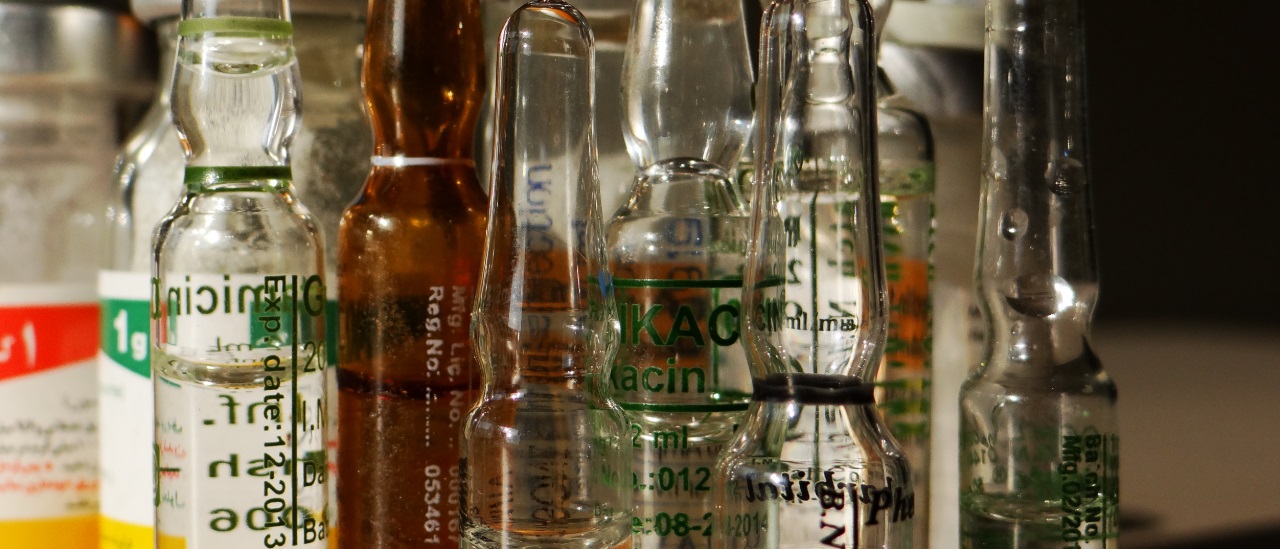
Providing International biological reference standards
Providing WHO international biological reference standards (WHO IBRS)
WHO establishes and provides international biological reference standards (WHO IBRS) to help ensure the standardization and quality control of medicinal biological products and in vitro diagnostics worldwide. WHO IBRS are physical reference preparations that allow for the consistent and comparable measurement of the biological activity or other crucial characteristics of such biological products and diagnostics across different laboratories, assay methods and regions. WHO IBRS thus provide a globally recognized basis for evaluating the biological activity and other characteristics of vaccines, biotherapeutics and other biological products, and for evaluating the performance of in vitro diagnostics.
By standardizing and harmonizing the evaluation and quality control of biological products and diagnostics, WHO IBRS are key to ensuring the quality, safety and efficacy of a huge and growing range of vaccines, biotherapeutics, blood products and other biological products and diagnostics. WHO IBRS also help to establish appropriate clinical dosing regimens, and to interpret diagnostic and treatment monitoring outcomes.
As the complexities of biological products and associated technologies increase, WHO IBRS too are evolving, and are increasingly required in advanced fields such as cell and gene therapies, and the rapidly expanding use of high-throughput sequencing technologies. In addition, streamlined processes now in place allow for the expedited development of urgently needed WHO IBRS during pandemics and other public health emergencies.
WHO IBRS are intended for laboratory use only and are not administered to humans.
Establishment of WHO IBRS
WHO IBRS are established following internationally coordinated collaborative studies involving multiple laboratories using a range of analytical methods. These studies allow for assessment of the suitability of a candidate preparation for use as a WHO IBRS. The study and data evaluation process is coordinated by a WHO collaborating centre and culminates in a recommendation by the WHO Expert Committee on Biological Standardization. Where appropriate, a value is assigned to the WHO IBRS (for example, a potency value in International Units) while for other WHO IBRS, no unitage is required or assigned.
The process whereby WHO IBRS are established is described in detail in the WHO Recommendations for the preparation, characterization, establishment and use of WHO international biological reference standards (2026).
These Recommendations update and supersede all earlier WHO guidance in this regard up to and including Annex 2 of WHO Technical Report Series, No. 932 (2004).
Distribution and availability of WHO IBRS
WHO IBRS are maintained and distributed by designated custodian laboratories, which are usually WHO collaborating centres.
Due to their limited availability and critical role, WHO IBRS are typically distributed to:
- national control laboratories
- manufacturers of medicinal biological products
- other qualified laboratories.
For the list of currently available WHO IBRS see:
Catalogue of WHO international biological reference standards